
On his first day at work, Rami caught everyone’s attention. Not because he was loud, brilliant, or the company’s next big hope, but because he displayed a curiosity and eagerness that made managers think he could shake things up and drive real change. And he did. In his first month, he questioned procedures no one remembered the reason for, experimented, and suggested alternatives. He was not reckless, he was simply alive.
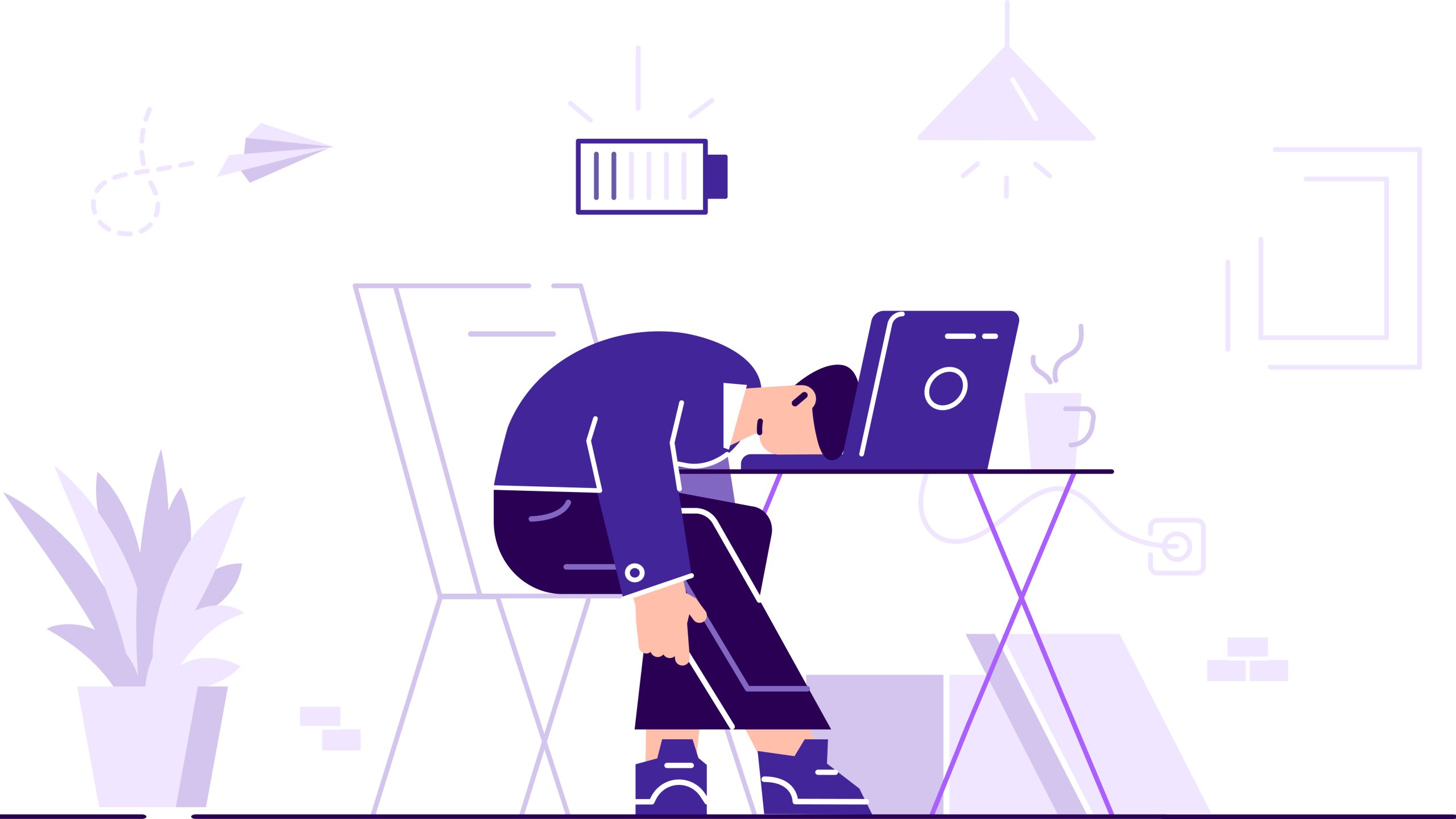
By the end of the third month, the energy faded. The same young man whose notebook was filled with ideas began to execute every step with machine-like precision. He arrived on time, left on time, and lived inside the small box the organization had drawn for him. If you asked him what changed, he would not mention pressure, exhaustion, or low motivation. He would simply say, “It is the routine here, I just do what everyone else does.”
Here lies the uncomfortable truth. Rami did not lose his creativity, the system trained him to abandon it. Not through strict rules or suffocating control, but through something subtler: a routine that prioritizes predictability over possibility. Young employees feel this shift first, managers notice it last, and in the space between the two, a company’s innovation quietly dies.
Where Does the First Spark Come From?
Every new employee begins with a seed of creativity that blossoms on the first morning. It is the innocent curiosity that pushes them to ask “why” and “what if.” It is the energy of standing at the edge of a new world, full of challenges that await solutions, and a space that seems ready for their contribution.
This beginning is fueled by psychological freedom, when ideas feel valuable and experimentation is welcomed, before responsibilities solidify into rigid molds. At this stage, creativity becomes the dominant language because the invisible barrier between what is familiar and what is possible has not yet formed.
But this spark needs air to keep burning; without it, it slowly fades into a memory.
How Does the Spark Turn to Ash?
Routine itself is not the enemy. It provides stability and prevents chaos. The problem begins when routine becomes an end in itself, when the goal becomes execution without understanding, and repetition without improvement. The signs appear when an employee performs tasks with the same order and accuracy, yet their eyes have lost the shine that once lit up their face when discussing a new idea. Work becomes a reaction, not an act of thought.
This creates the illusion of productivity: everyone looks busy, schedules are full, tasks are submitted on time, yet there is no new contribution, no fresh insight. It is production without soul, movement without direction, where the employee slowly shifts from being a creator to becoming a cog in a large machine that makes noise but invents nothing.
Leadership’s Unintentional Role in Reinforcing Monotony
The danger emerges when methodology becomes rigidity, and procedures turn into sacred rituals that must not be touched. Weekly meetings that repeat the same cycle, performance reports that measure quantity but ignore quality, and success indicators that celebrate stability while avoiding calculated risk. These elements appear effective on the surface, but inside, they create an empty creative space.
There is a widespread illusion: a stable system is a creative one. The truth is that real stability comes from adaptability, not blind adherence to what already exists. Leaders often reinforce this monotony without intending to, especially when they reward compliance and silence uncomfortable questions. They believe they are keeping things running smoothly, while in fact they are building walls around creativity.
And Then Comes the Quiet Moment When the Mind Stops Asking
The turning point arrives when the employee stops asking “why.” It is not a dramatic moment announced out loud, but a long silence that settles in the mind and spirit. Fear of breaking the pattern becomes a stronger deterrent than any written rule. The employee does not stop being creative because they cannot create, but because they learned that stepping outside the norm may bring discomfort, judgment, or even negative evaluation.
Burnout disguises itself as efficiency. The employee believes they are performing well because tasks are completed, yet a part of their humanity and innovation is being buried. The box they work in becomes comfortable, not because it fits, but because they have adapted to its narrowness.
Restructuring the Workplace, From Restriction to Empowerment
The solution is not to eliminate routine, that is impossible. The answer is to design flexible routines that support creativity rather than cage it. Systems should exist for clarity and efficiency while leaving safe spaces for experimentation and learning through mistakes. This can be done by giving employees ownership over certain areas where they can test ideas freely.
There is a big difference between top-down rituals and intentional, meaningful processes. One bold idea is to adopt a “80 percent structure and 20 percent intentional disruption” rule, where time and resources are allocated to side projects and unconventional ideas. Most importantly, curiosity must be repositioned as an asset in the workplace, not a threat, through encouraging questions and genuinely listening to the answers.
Let Us Bring Life Back Into Our Offices
Rami’s story is not an exception, it is a daily reality in many workplaces. It reminds us that a company’s greatest asset is not just the time or energy of its employees, but their imagination and their ability to question. Routine is necessary, but it must be an outline that holds creativity, not a cover that suffocates it. When we learn to balance structure with freedom, stability with flexibility, we prevent our talented employees from turning into mere machines.
We create workplaces where minds flourish, ideas grow, and organizations shift from places of work to spaces of inspiration.
It is time to bring life back into our offices, the life of curiosity, passion, and creativity.


